Build Resiliency into Your IR Practice to Protect Valuation during Transition
Companies emerging from transition with their valuation intact embed resiliency in their IR practice and program as a buffer to support valuation and limit volatility.
By Nicole Nordwall MBA, Founder & Managing Partner, ARCO IR Advisory
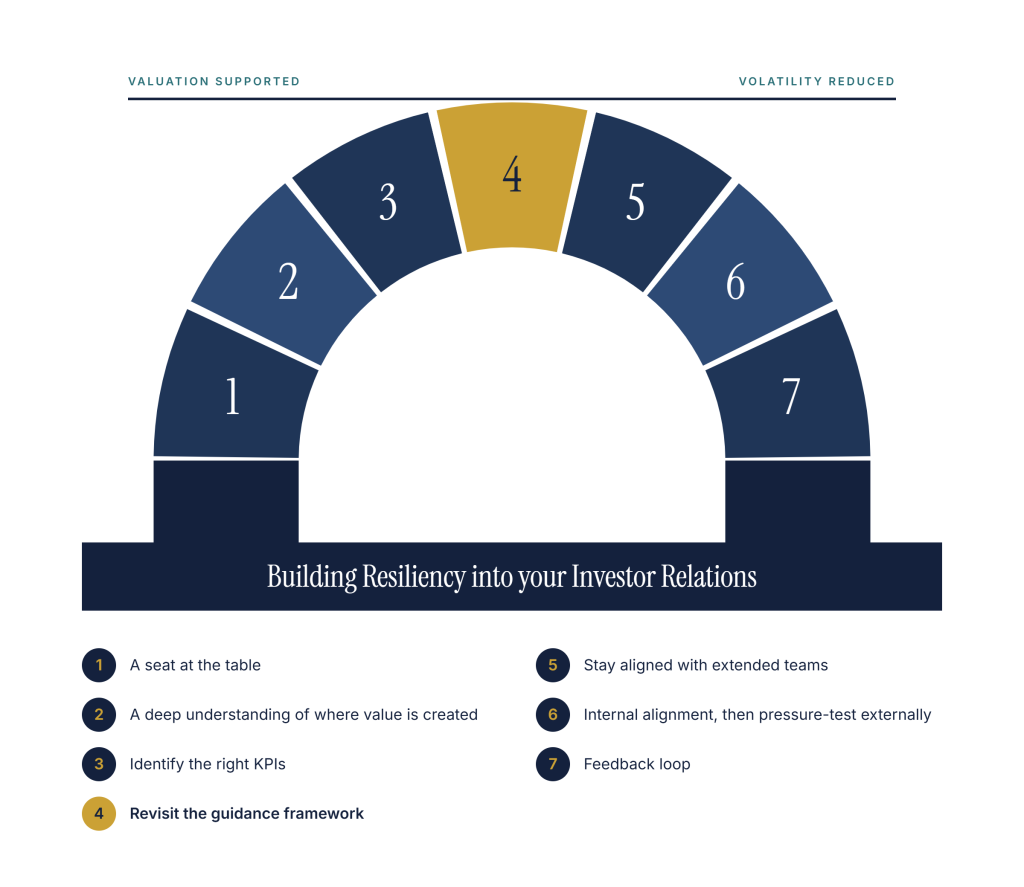
Catalysts for a transition may originate in one of two places. They may be endogenous, driven by internal events such as a change in strategy, leadership or reporting segments. Alternatively, a company may face exogenous shocks brought about by shareholder activism, geopolitical shifts, changes in consumer behavior, natural disasters or a global pandemic such as COVID-19. The following behaviors and practices are key to building resiliency into your IR program and practice.
A Seat at the Table
IR can only effect change if they have a seat at the table and are privy to strategic discussions that will move the needle for investors before they are announced. Recognizing the confidentiality and sensitivity around matters such as M&A or CEO succession, some management teams bring IR in too late for anticipatory preparation to take place. Effective IR means being the eyes and ears of the Street for the Board, and the Board’s voice back to the Street. Having a seat at the table enables that two-way flow, without which, the Board and management lose touch with investor sentiment, and investors can be caught off guard by company decisions. If this happens, it ultimately undermines management’s credibility and the company’s valuation.
Effective IR means being the eyes and ears of the Street for the Board, and the Board’s voice back to the Street. Having a seat at the table enables that two-way flow, without which, the Board and management lose touch with investor sentiment, and investors can be caught off guard by company decisions.
Nicole Nordwall
Articulate Where Value Is Created
Every equity story contains elements that should not change, such as how the company creates value, what is unique about it and why that difference enables it to win. Unlocking value requires the articulation of these value creation elements of the story so that the Street can fully understand your company. Highlighting how the company is thinking about risks and how it is tied to the opportunity ahead will help investors to more accurately value your company. In addition to the above, careful and critical evaluation of milestones shared is paramount. Beware of adding elements that do not highlight the value creation opportunity, as this will only add noise and distract from core progress or challenges.
Identify the Right Key Performance Indicators (KPIs)
KPIs identify those elements or metrics that will flow through to the P&L and can help identify the transition being navigated. Investors expect and will want to track momentum against KPIs. Clear communication of the progress against stated metrics provides evidence that what management is saying is actually coming to fruition. Understand where the data is lacking or where better disclosure or introduction of new metrics might provide more clarity and support the story. The most common failure in a messaging transition is discovering part way through that the new narrative cannot be properly substantiated with anything the Street is able to track consistently.
Revisit the Guidance Framework
Meaningful transitions force a decision about whether to reset, suspend, or re-base guidance. Knowing how to bridge where you are now to where you are heading to next will remove much of the uncertainty that will surface if not addressed. Companies that effectively manage their transition modify their guidance to illustrate progress against their initiatives. It may call for a change in the guidance horizon as we are seeing now with companies whose AI payoff is beyond the typical three-year guidance time period we see most companies providing. In addition, it may call for new metrics to better illustrate the direction of travel.
Align with Extended Teams
To facilitate a more agile investor communications program, careful coordination of the team is necessary and is often driven by the IRO. Materiality and Reg FD constrain when and how a transition and its elements can be communicated. In some instances, it may become necessary to liaise with the legal team around disclosures which may require additional oversight due to material changes in the equity story. Working closely with operations and finance is necessary to understand not only what happened in the quarter but what is likely coming in the next two to three quarters. Cascading those messages across the organization through engagement with the various communications teams then ensures internal and external alignment with one voice and one message across public announcements to employee communications.
Internally Align, Pressure Test Externally
The CEO, CFO and IR should be telling the same story during every interaction, supported by prepared Q&A that holds up against robust analyst scrutiny. Consistency is key. In the face of scrutiny, well prepared teams with message cohesiveness and discipline are rarely caught off guard because they have done the homework. Cracks in consistency tend to show up very early into a Q&A session if not fully prepped.
Leverage the Feedback Loop
A standing dialogue with top holders and covering analysts is table stakes for gathering feedback proactively. These insights from investors are often the clearest indicator to management how the equity story is landing. To be most effective, the feedback should be on a continuous basis rather than reactive sampling once a transition is already underway. In addition, dispersion across sell-side models, the mix of questions on quarterly calls, share register composition and turnover relative to peers, as well as the occasional perception study to widen the net and hear from those investors who continue to sit on the sidelines, all provide in-depth and valuable insight. Integrating investor feedback will not only sharpen your equity story and clarify the areas the market misunderstands but it will help investors to value your business more accurately.
Conclusion
Regardless of the depth or breadth of transition your company may be undergoing, integrating these disciplines into the core of your IR program and practice builds the resiliency to contain volatility and protect valuation.
Resiliency in IR is not developed overnight or in the middle of a transition but comes from regular, unsparing evaluation of your equity story and how investors are actually receiving it. Build that into your IR practice today so that you are not caught out when it matters most.
About the Author
Nicole is the founder of ARCO IR Advisory, an IR boutique providing advisory and execution services to IROs and management to reframe their equity storyfor key events andatcritical inflection points. She is a recognised thought leader and expert in investor relations communications. She has a background in sell-side advisory and over 25 years experience spanning capital markets and investment banking. She has served as an in-house IRO at six publicly listed companies. Email nnordwall@arcoiradvisory.com